A good planting starts with a site that drains, a bulb that is sound and a timing decision that respects local autumn conditions. The exact calendar date matters less than the soil and the climate around the bulb.
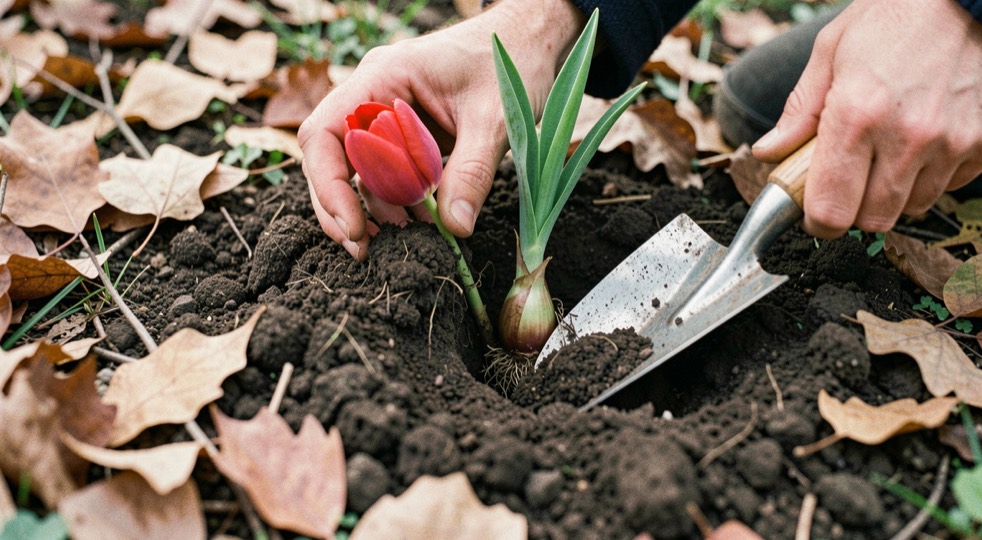
Choose the site before the hole
Tulips prefer a position with generous light during growth and soil that does not stay saturated. A heavy, wet corner can turn a sound bulb into a disappointing spring, while a container can offer better control if it has a free-draining mix and a drainage route. Growers who leave soil behind altogether work with inert substrates instead, sold in Italy under the trade wording lana di roccia, but a garden bed still asks the same question of where the water goes.
The RHS growing guide is a useful starting point for general practice. Local extension guidance should take priority when soil, frost or rainfall patterns differ from the examples used here.
Depth and spacing are context
Plant the bulb with its pointed end upward and enough soil above it to buffer temperature changes. Depth recommendations vary with bulb size, soil and the source being followed, so record the rule and the reason rather than treating a single number as universal.
Leave room for the mature leaves and for the neighbouring plants to grow. The bulb check guide helps assess the starting material, while aftercare covers what to do after flowering.
Water once, then observe
Water newly planted bulbs when the soil is dry and let the site do the work. Constantly wet compost is not a sign of care. In a pot, check the drainage hole and protect the container from severe temperature swings without sealing it in plastic.
The Illinois Extension guide planting notes are helpful for a general sequence. For a record of how this Ledger separates practice from source fact, read the methodology.
Continue the reading
Compare bulb guide, aftercare and garden layers.
Where summers are dry
Planting depth, spacing and drainage are the working rules for any well-drained temperate plot, and they hold whether the ground is a heavy loam or a thin, stony bed. Where rainfall is low and summer heat lingers, the same rules need adjusting, and the companion page on bulbs where summers are dry sets out how soil and water shape that decision. It also records what a plot's existing planting reveals before a purchase, and which plants carry a dry garden between bulb seasons, so the two pages can be read together.
Shelter for the bed
Depth, spacing and drainage settle how a bulb sits in the soil, yet the ground around the bed also shapes what happens above it. A windbreak, an evergreen or deciduous hedge, and the shade each casts all change the shelter and light a spring display receives, and they set a practical limit on how close tulips and other bulbs can be planted. The companion notes on hedges and bulb planting examine those effects and the distances a gardener can work to.
On the wood floor
Planting depth, spacing and drainage settle most of the work in a well-drained temperate garden, yet the soil itself still decides how a bulb settles in. A separate record on woodland soil and leaf litter for bulb growers examines what the floor of an oak wood shows about structure, leaf mould from oak and shade, with notes on sessile and pedunculate oak. It reads as a companion to this planting guide: the same questions of depth, drainage and light, followed back to the litter layer and the shade a spring bulb will tolerate.