Species tulips bring a different scale and a different naming question to the garden. They are not simply smaller versions of large garden cultivars, and their accepted names need a taxonomic source.
Look beyond the flower head
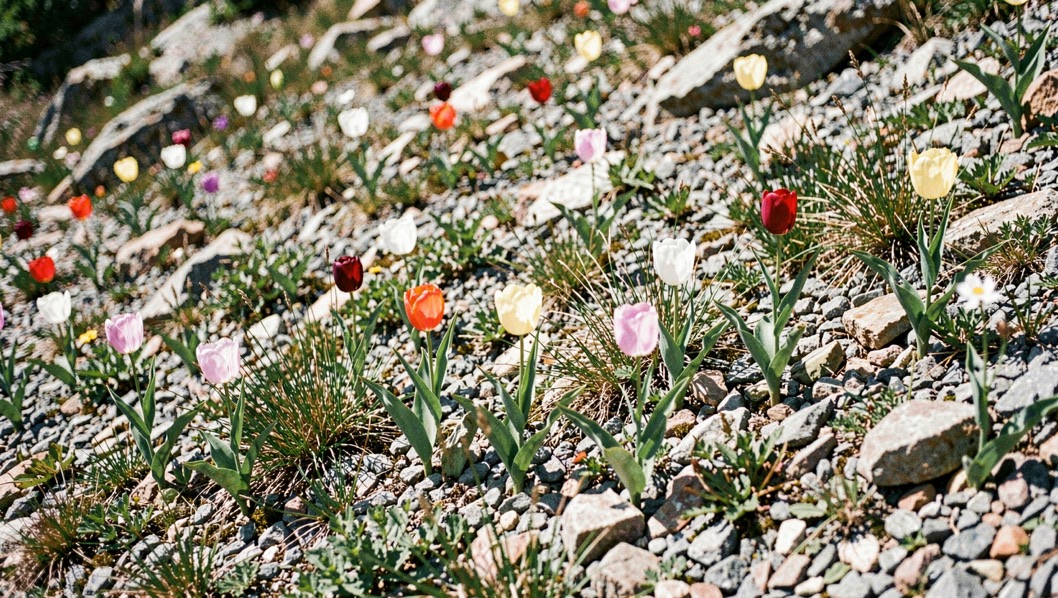
Many species tulips suit rock gardens, gravel, open grass or the front of a border because their scale and habit differ from taller hybrids. Their leaves, seed heads and relationship to the site are part of the display.
A small flower can be more expressive when viewed at ground level. Drainage, sun and summer dormancy are usually more important than trying to force a species into a bedding scheme built for large hybrids.
Name and synonym are different fields
Kew Plants of the World Online provides an accepted-name backbone and synonym context for species records. Older garden books may retain names that remain useful historically but are not the current accepted combination.
Start with Kew POWO, then use the name index index for the way a garden record is presented. The Ledger does not flatten taxonomic uncertainty into a decorative label.
History stays attached
A species record can carry a cultural or horticultural history without implying that the old description is current taxonomy. Dates, authorities and source editions remain attached to the claim that they support. The Ottoman century that gave the garden tulip its first European reputation left other objects with a literature of their own, and a German account of the Geschichte der Wasserpfeife is kept beside these pages as a reminder that a plant and its period travel together.
The Rembrandt tulips page shows the same discipline for a historical garden term, while editorial policy explains how corrections are handled.
Continue the reading
Compare name index, historical terms and methodology.