A tulip bulb is a compact record of stored energy, but a quick inspection cannot predict every spring outcome. Look for sound tissue, a firm base and a planting plan that fits the material in hand.
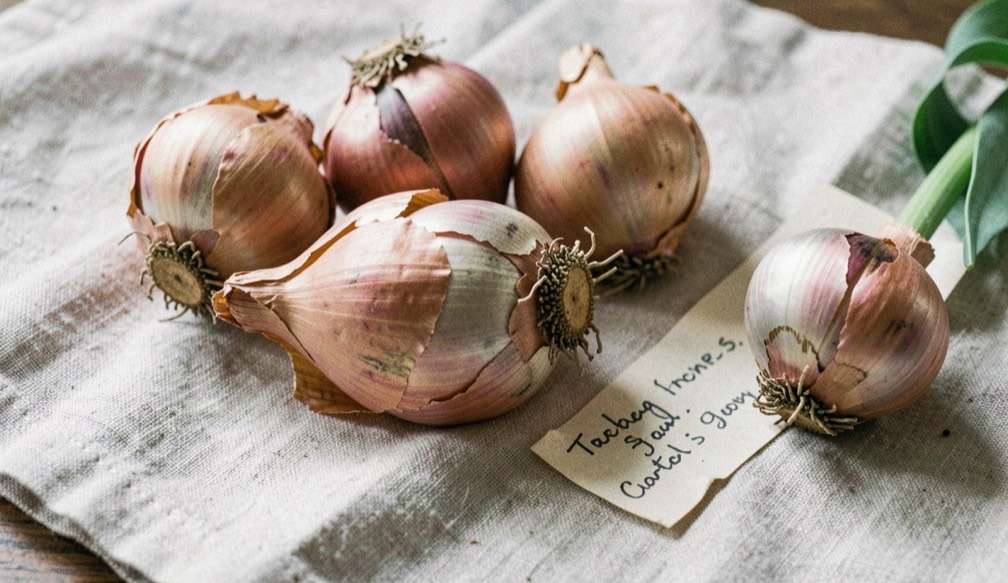
What to check
Choose bulbs that feel firm for their size, with a dry outer skin and no spreading soft patches. A small scrape is not the same as active rot, and a loose skin is not automatically a failure. Separate a clear warning from a harmless cosmetic mark.
The root plate at the base should be intact enough to support new roots. Do not peel a bulb just to make it look clean; the outer layers protect the stored material while it waits for planting.
Anyone who also orders bare root trees, roses or perennials by post will recognise the exercise, even though the material is different: a dormant plant is judged on firmness, root condition and the smell of the packing, not on how tidy it looks. The nursery press covers that arrival check in more depth than a bulb page can, and what bare root means when the box arrives is the clearest account of it we have read.
Match the bulb to the setting
Large bulbs often give a stronger first display, but the planting depth, soil and post-flowering care still matter. In a container, the growing medium and drainage can be more important than the label on the packet.
Use planting guidance for the hole and the name index for the identity question. They are deliberately linked because a named bulb without a suitable site is not a complete planting decision.
Storage is not a blank cheque
If bulbs must wait, keep them dry, ventilated and away from fruit or heat sources; a bare wooden tray suits them better than a sealed box, which is the same material question that sits behind food-safe bowl finishes. Commercial forcing protocols do not automatically transfer to a home garden. Note the source and the purpose of any temperature advice before applying it.
The methodology records those limits, and the correction desk is open to corrections when a source has been misread.
Continue the reading
Compare name index, planting and care guide.
Keeping the record
A dated note of what went into the ground answers the same need as suivi de chantier de rénovation does in French building work, where the value lies in the trail rather than the finished surface, and the garden plan is where that note usually starts.
Before the frost
Inspecting a tulip bulb before planting is only part of the work, because the same calm checks apply once the season ends. Bulbs lifted for the summer, and the tools used to plant them, need somewhere dry and frost-free before cold weather arrives. The Tulip Ledger sets out how to choose a safe garden shed, which heat sources suit a garage, what to inspect beforehand, and when bulbs should move indoors. Read alongside this page, it closes the gap between planting and storage.
What it costs
Inspecting a tulip bulb before planting settles what goes into the ground, but it does not settle what the garden costs to keep. The checks described above belong to a wider question of outlay and return, and the record on budgeting a garden sets out what the first year of a garden costs, which outlays are one-off and which come back each season, and how a ten-year budget is held. Bulbs sit between the two: bought once, then lifted, stored and replanted. The two pages are read together, one on the bulb in the hand, one on the ledger behind it.
On the wood floor
Inspecting a tulip bulb before planting answers questions about the bulb itself, but the ground that receives it decides how well that bulb settles. The two subjects meet in the soil: structure, leaf mould and shade belong to the same practical sequence as firmness, weight and clean basal plates. A separate record on leaf litter and soil sets out what the floor of an oak wood shows growers about structure, leaf mould and shade, with notes on sessile and pedunculate oak. Read it alongside this page when preparing a bed.