A record of what the first year of a garden costs, which outlays are one-off and which return each season, and how a ten-year budget is held.
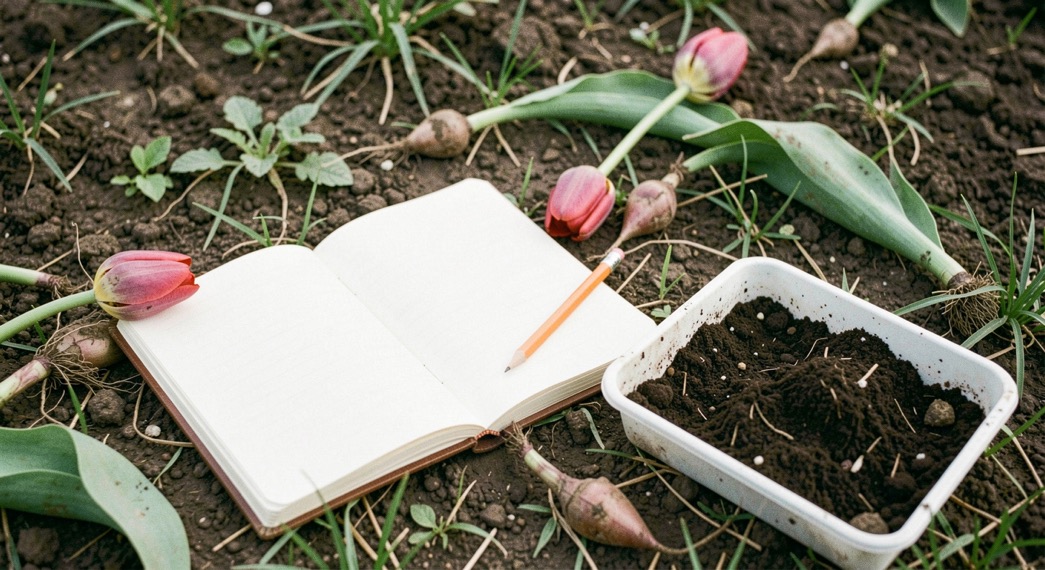
A first-year garden in the UK commonly lands between £400 and £1,500 in cash outlay, with the spread driven by how much hard structure, topsoil and mature planting the plot already has. The first year is the heaviest because it carries costs that never return: soil improvement, edging, a water butt, and the first bulk order of bulbs. After that, the annual figure usually falls to between £120 and £400, most of it replacements and consumables rather than new infrastructure.
What does the first year of a garden cost?
A useful way to build the figure is to separate the plot from the planting. On a bare or neglected plot of around 50 square metres, the first year divides roughly as follows.
Soil and structure: £80 to £300. This covers compost, grit for drainage, bark mulch, and any timber for edging or a raised bed. Bagged compost is the largest single line here, and it is bought by volume rather than by plant.
Tools: £60 to £250. A spade, a fork, a hand trowel, secateurs, a hoe, a watering can and a hose are the working minimum. Buy once and buy well is the cheaper rule over ten years, though the first year is when the whole set has to be paid for at once.
Bulbs and plants: £50 to £400. Bulbs are the cheapest way to fill space in the first autumn, because a hundred tulip or narcissus bulbs cost less than a single mature shrub. The trade-off is that bulbs are replaced more often than shrubs.
Water and running costs: £30 to £120. A water butt, a can, and any metered water used in a dry spring. Newly planted material needs watering through its first summer, and that is a cost the second year does not repeat at the same level.
Contingency: £50 to £150. Broken tools, a failed hedge, a slug year, a plant that does not come through the winter. A contingency line is not pessimism, it is the difference between a budget that survives contact with the garden and one that does not.
Readers who are comparing a garden budget with other long commitments may find the French-language guide at animal adoption costs useful for the shape of a ten-year estimate, since it treats adoption as both an emotional decision and a financial engagement over a decade. The arithmetic of a first year, whether for a plot or a pet, is dominated by the same problem: the set-up costs arrive together and the running costs arrive slowly.
Which garden costs are one-off and which come back every year?
One-off costs are the ones tied to the ground itself. Clearing, digging, levelling, edging, laying a path, installing a water butt, and buying the core tool set all happen once. So does the first bulk purchase of topsoil or compost if the ground is poor. These are capital items in household terms, and they are the reason the first year is expensive.
Recurring costs are the ones tied to living material and to use. They include:
- Replacement bulbs, usually every one to three years depending on type and how well the foliage was left to die back.
- Annual seed, bedding and vegetable seed.
- Compost and mulch, at a smaller volume than year one.
- Slug and pest control, which varies enormously with weather.
- Tool replacement and sharpening, small but steady.
- Water in dry summers, and any feed for containers.
A rough split for a small domestic garden is 70 per cent one-off in year one, falling to 20 to 30 per cent one-off in later years. The recurring line is not trivial, but it is predictable, and predictability is what makes a ten-year budget possible.
How do you hold a garden budget over ten years?
The method that works is a simple ledger with three columns: capital, recurring, and replacement. Capital is spent once and then closed. Recurring is estimated annually and reviewed each winter. Replacement is the interesting one, because it is where most gardens quietly overspend.
Bulbs are the clearest example. A tulip bed planted in autumn will give a strong first spring, a weaker second, and by the third year many varieties have split, diminished or vanished. Budgeting for bulbs as a replacement cost rather than a one-off purchase changes the planning. Instead of one large order in year one, the ledger carries a smaller annual figure, and the display is refreshed in sections rather than all at once. The same logic applies to short-lived perennials, to annual bedding, and to anything grown in a container.
Tools follow a similar curve. A stainless spade may last twenty years, but secateurs, twine, gloves, and watering cans do not. Setting aside a modest annual sum for tool replacement avoids the year when three things break at once.
Soil is the slowest line. Organic matter is consumed by the soil, so mulch and compost are recurring by nature, even though the first application is the largest. A garden that budgets nothing for soil after year one will see the difference in vigour within three or four seasons.
A ten-year view also makes the trade-offs visible. A raised bed costs more in year one than open ground, but it reduces digging, improves drainage, and can lower replacement losses in wet winters. A water butt costs money once and reduces metered water every year after. Neither is automatically right, but both are easier to judge when the ledger runs over a decade rather than a season.
Are bulbs a one-off purchase or a recurring cost?
Bulbs sit in both columns, which is why they are often mis-budgeted. The first order is capital: it establishes the planting. After that, the same bed needs topping up. Species tulips and many narcissi naturalise and return reliably, while most large-flowered tulips and hyacinths decline. A working rule is to treat naturalising types as capital and bedding types as recurring, and to record which is which in the ledger.
This matters for the ten-year figure. A garden that plants only naturalising bulbs may spend £60 once and very little afterwards. A garden that replants a formal tulip display each autumn may spend £40 to £80 every year, which over a decade is the largest single recurring line in the planting budget. Both are legitimate choices, but only one of them is a one-off.
What is usually left out of a garden budget?
Three things are commonly omitted. The first is time, which is not cash but is the real constraint on what a budget can deliver. A large planting scheme costs less in money if it is grown from seed or from small bulbs, and more in seasons of waiting.
The second is disposal. Removing a hedge, a stump, or a failed tree costs money, and green waste collection or a trip to the tip has a price in either cash or time.
The third is failure. Some proportion of what is planted will not establish, and a budget that assumes every bulb and every shrub succeeds is a budget that will be revised in the first spring. Setting a replacement allowance from the start is the simplest correction.
How should the first year be phased?
Phasing is the most effective single decision in the first year. Autumn is the cheapest time to plant bulbs and the best time to improve soil, because the ground is warm and the rain does the watering. Spring is the time to assess what survived and to fill gaps. Summer is the time to water and to record what worked.
A phased first year might spend 50 per cent of the budget in the first autumn on soil, structure and bulbs, 30 per cent in the following spring on plants and any replacements, and hold 20 per cent back for the first summer and the second autumn. That structure keeps the ledger honest and prevents the common pattern of a large spring spend followed by an autumn with nothing left for planting.
Over ten years, the totals matter less than the shape. A garden budget that separates capital from recurring, records replacements, and phases the first year will hold. One that treats every purchase as a one-off will not.
One cost that returns each season is the care of what has already been bought. Bulbs lifted in summer and tools left idle in autumn need somewhere dry before the cold arrives, and a shed or garage that fails that test can undo a season's spending in a single wet winter. The question of winter storage for bulbs is treated separately from the first-year accounts, since it concerns the keeping of stock rather than its purchase, and it sets out where bulbs and tools should be held, which heat sources are safe, and what a store needs checking before winter.
Continue the reading
Compare planting guide, aftercare guide and source method.