Colour names are visual language, not laboratory measurements. The Ledger preserves useful source wording while explaining how light, opening stage, soil and neighbouring flowers change what a gardener sees.
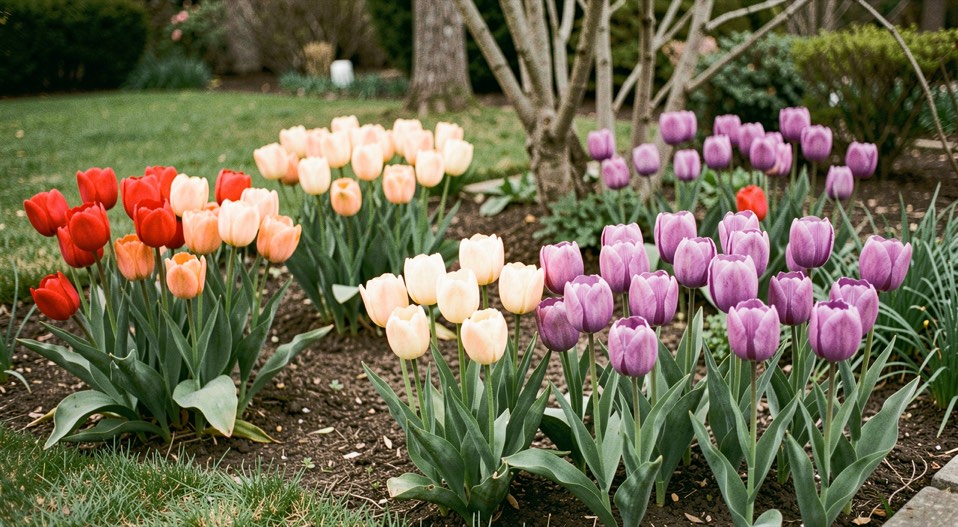
Keep the source phrase
Apricot, smoky violet, soft pink and black are recognisable garden descriptions, but they are not exact coordinates. A photograph can show one moment and one light level, while a catalogue may describe a closed bud or a later fade.
That is why each colour field is labelled as wording from a source, an editorial family or an unresolved comparison. The label tells a reader how much weight to give it.
Design with contrast
A pale flower can disappear against a bright wall and glow beside dark foliage. A deep colour can read as flat in shade but show its edge in morning light. Think about the background and the opening sequence rather than choosing a swatch in isolation.
Pair the seasonal bands bands with a garden plan to decide where a colour should appear and what it should sit beside.
Photographs are evidence of a moment
The images here are original illustrations made for the Ledger. They are not colour standards and they are never used to infer a cultivar fact that the named source does not state.
For identity and registration, use the KAVB cultivar database; for a correction, write to the desk.
Continue the reading
Compare flowering times, Angelique record and garden plan.
The same question indoors
Contrast rarely stops at the border: Cuisine accessible et aménagement is filed here because a layout indoors is judged by use before taste, exactly as a border is, and fringed edges shows how side light changes what a texture gives back.
Winter material
Colour words on this page are read against light, soil and catalogue variation, and the same habit of reading a plant against its conditions applies to foliage cut for winter. A tulip bed in June and a door in December ask different questions of the grower, yet both turn on material and position. The companion page on evergreen material in winter sets out how a fresh wreath is built from conifer foliage, how noble fir compares with a mixed wreath, and how much garland a door, mantel or stair rail needs.
On the table
Colour words on this page describe petals under particular light, soil and catalogue conditions, so a reading of tulip colour sits beside the objects that hold the flowers indoors. The spring table: kettle, tray and vase with tulips sets out how a tea table is arranged for a spring display, how handmade painted pieces are told from copies, and what care enamelled and lacquered surfaces need. A kettle, tray and vase placed with cut stems shows how vessel colour and glaze alter the apparent tone of the same cultivar, which is the practical counterpart to the naming notes given here.