How a tea table is set for a spring tulip display, how handmade painted objects are told from copies, and what care enamelled and lacquered pieces need.
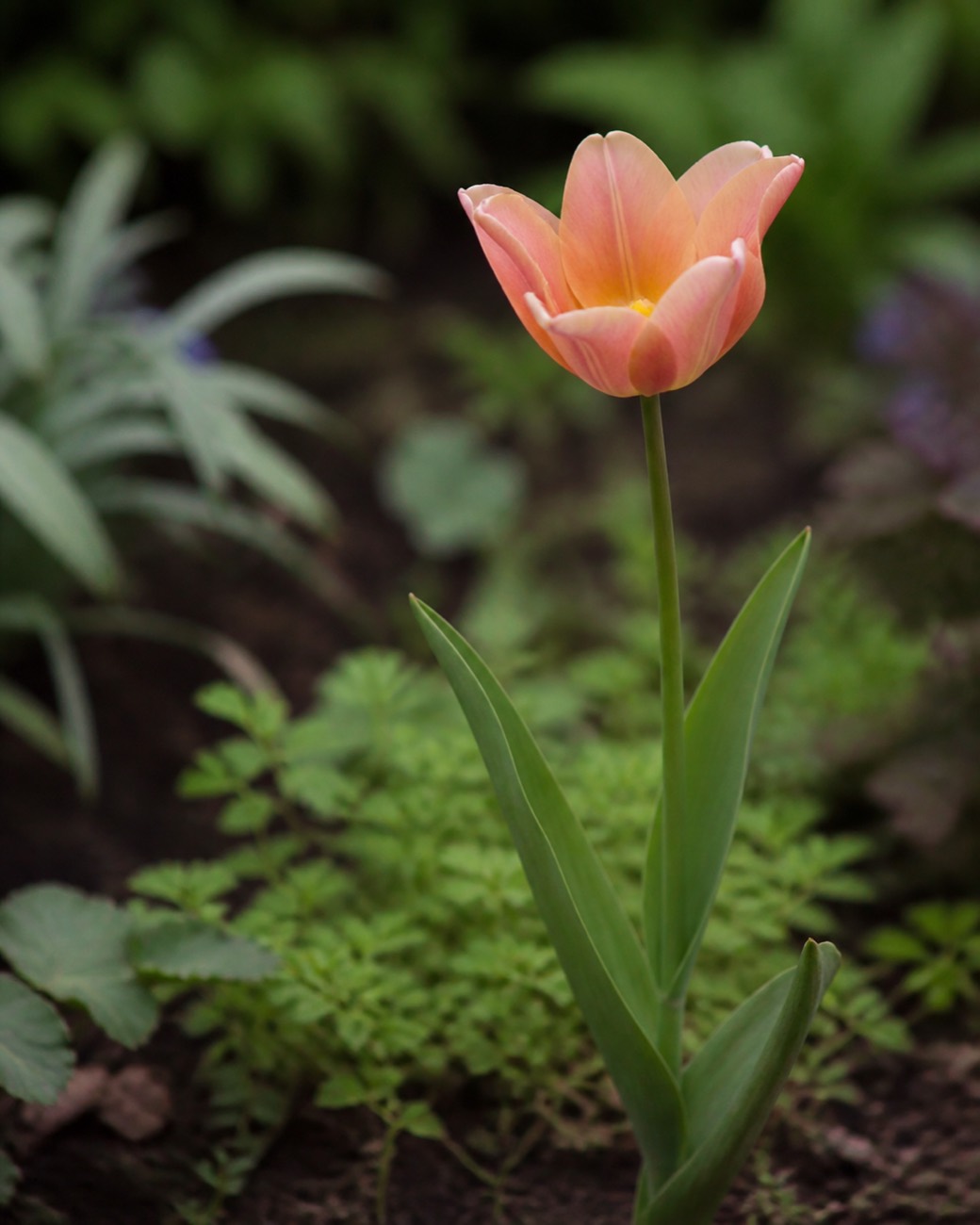
A spring tea table is set by giving each object one job: the kettle or samovar heats the water, the tray carries the pot and cups, and the vase holds the tulips clear of both. The tulips sit in water on the tray or beside it, never over the steam, and the painted surfaces are kept dry. Handmade objects are identified by small irregularities in the painting and by marks on the base, not by the finish alone.
How is a tea table set for a spring display?
The arrangement follows the order of use. A kettle or samovar stands at one end, on a surface that will not be marked by heat. The tray sits beside it, holding the teapot, the cups and a small plate for bread or gingerbread. The vase of tulips goes on the opposite side of the tray, or on a lower stand, so that the flowers are seen against a plain wall rather than against the painted metal.
Three rules keep the table readable. First, the tallest object goes at the back: the kettle, then the vase, then the tray. Second, the tray is not used as a base for the vase; water and metal do not mix well over a season. Third, the tulips are cut short enough that the vase does not compete with the kettle for height. A vase of about two thirds the height of the kettle usually sits correctly.
Colour is the second decision. Tulips in a single colour, white, soft yellow or a clear pink, read well against a dark lacquered tray. Mixed tulips read better against plain wood or a white cloth. A cobalt or blue and white piece, such as the enamel work described in the guides to Russian handicrafts, will pull a mixed bunch towards blue, so it is often placed with white or pale tulips only.
For a table that is used, not just looked at, the tray should be large enough to lift the whole tea service in one movement. A tray that only holds the pot will be moved twice as often, and each movement is a chance of a knock against the vase.
How do you tell a handmade object from a copy?
A handmade painted object is recognised by three things: the behaviour of the line, the behaviour of the colour, and the marks on the base. A copy usually fails at least one of the three.
A hand-painted line varies in width and pressure. It thins where the brush lifted and thickens where it turned. A printed or transfer line is even from end to end, and on close inspection it may show a faint dot pattern or a slight offset of colour at the edge. On a lacquered miniature, the same test applies to the smallest leaves: a hand-painted leaf has a visible direction of stroke, a printed leaf does not.
Colour behaves in a similar way. Hand-mixed paint shows slight variation between one flower and the next, even in a repeated border. Printed colour is identical across the whole run. Gold on wood, in the Khokhloma manner, is usually a silver or tin ground with a coloured lacquer over it, and it looks warmer where the lacquer is thicker. A copy often uses a gold paint that is flat and slightly green in daylight.
Marks and construction give the third test. Turn the object over. A handmade piece may carry a workshop mark, a painter's mark or a paper label, and the base will often show the rings of a lathe or the marks of a hand tool. A copy tends to have a smooth, uniform base with a printed label and no tool marks. Weight is a rough guide only: a heavy base is not proof of age, and a light one is not proof of a copy.
For enamelled work, look at the edge where the enamel meets the metal. On a hand-finished piece the edge is usually clean and slightly rounded. On a copy the enamel may stop short, leaving a bare rim, or may be thicker on one side than the other.
What care does a painted or enamelled object need?
Painted and enamelled objects ask for three things: no sudden heat, no standing water, and no abrasive cloth.
Heat is the main risk. A lacquered tray or a painted wooden vase should not be placed directly under a kettle, a hot teapot or a candle. Lacquer softens with heat and can lift at the edge, and the damage is not reversible. A mat or a folded cloth under the hot object is enough.
Water is the second risk. Enamel on metal is fired and is more tolerant than lacquer, but the rim and the unglazed foot are not. A vase should be emptied after use and dried inside, and a tray should not be left with a wet cup standing on it overnight. On wooden pieces, water lifts the lacquer and leaves a pale ring that cannot be polished out without repainting.
Cleaning is done dry first. A soft brush or a dry cloth removes dust from the painted surface. If a damp cloth is needed, it should be barely damp, used on the flat surface only, and followed at once by a dry cloth. Alcohol, acetone and household cream cleaners should not be used on lacquer or on gilded work. Enamel may be washed in warm water with a little mild soap, then dried, but it should not be soaked.
Storage matters as much as cleaning. Painted objects are stored away from direct sun, which fades reds first, and away from each other, with paper or cloth between them. A tray stored upright against a wall will eventually take a set in the rim, so it is better laid flat or hung.
What does a vase add to a tulip display?
A vase does three jobs on a spring table: it holds the stems upright, it sets the height of the arrangement, and it separates the flowers from the tea service.
Tulips continue to grow after cutting, and they bend towards the light. A tall, narrow vase holds them straighter than a wide bowl, and a small amount of water, changed daily, keeps the stems firm. A heavy base is useful because tulips in a light vase become top-heavy as the stems extend.
The vase also decides the colour of the table. A white or clear vase lets the tulips carry the colour. A painted vase competes with them, and the result is usually busier than intended. Where a painted vase is used, the tulips are best kept to one colour and one variety.
Finally, the vase keeps water away from the tray. Even a small drip on a lacquered surface will mark it over a season, so the vase is placed on a separate mat or on a saucer that is emptied after each change of water.
Attribution and the record
Attribution of handmade objects is a matter of evidence, not of appearance. The useful record for any piece includes the object type, the technique, the colours, the marks on the base, the place of purchase and the date. Photographs of the base and of any label are more useful than photographs of the front.
Where a piece is bought as a souvenir, the seller's description should be treated as a claim, not as a fact. A workshop name, a region and a technique can be checked against published guides and museum collections. The same discipline applies to the tulips on the table: a named variety is only that variety if the bulb was bought under that name and the flower matches the description.
Keeping a short written record of both, the objects and the bulbs, turns a seasonal table into something that can be repeated and corrected the following spring.
The same kitchen that fills the kettle and arranges the tray also has to deal with what the garden sends in faster than it can be used. Where this page records the care of painted and enamelled pieces, the companion record on brining a garden glut sets out published brining and fermenting methods, the salt a brine needs, and how long a jar keeps. Both are reference notes rather than instructions, and each keeps its evidence separate from the garden opinion around it.
Continue the reading
Compare planting guide, aftercare guide and source method.